
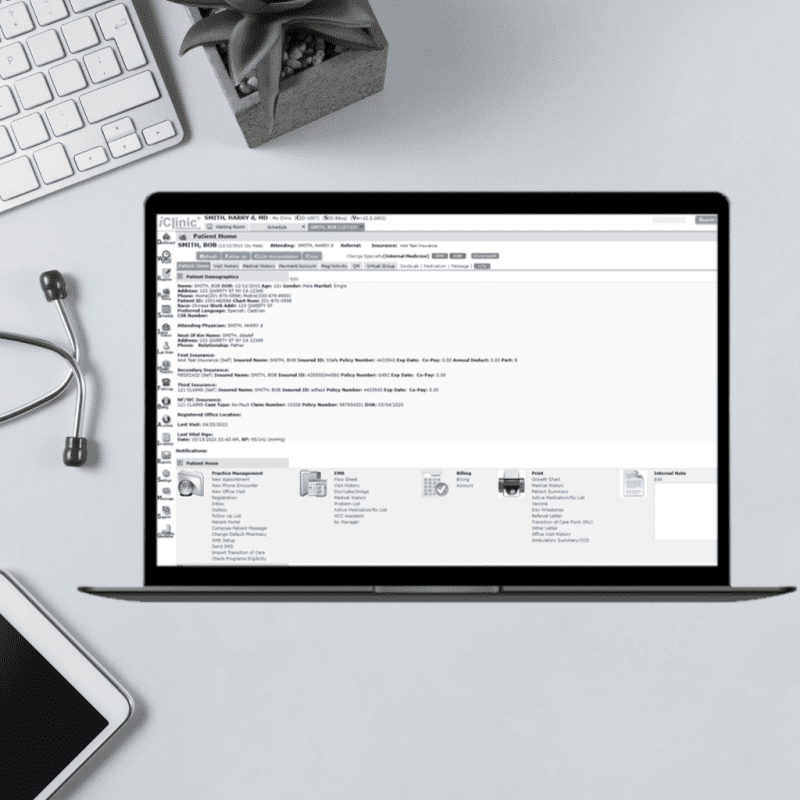
The integration of electronic health records (EHRs) into healthcare systems worldwide has shifted how care is delivered and managed. These systems have since grown into sophisticated technology that provide real-time access to patient information and boost the quality of care.
EHRs are changing modern practices, and their role goes far beyond just record-keeping. When implemented effectively, it empowers healthcare providers and organizations to embrace a new era of more coordinated, personalized, and efficient care.
Improving Clinical Decision-Making
One of the most significant advantages is the ability to enhance clinical judgement. EHRs eliminate this problem by storing all patient data in one easily accessible, digital format. Physicians, nurses, and specialists can now instantly access up-to-date health information, including diagnoses, treatment history, laboratory results, and medication lists.
This quick access to information helps doctors make better choices. Clinical Decision Support Systems (CDSS) make EHRs even more useful by offering real-time advice, helping to prevent mistakes like drug interactions or missed diagnoses. Not only do these systems streamline clinical workflows but also improve decision-making by providing actionable insights at the point of care.
The impact is especially significant when treating complex patients with multiple conditions or when making critical choices where access to timely data can be a matter of life or death. With the power of EHRs, clinicians are better equipped to deliver the right care at the right time, leading to improved patient outcomes and reduced risks.
Enhancing Care Coordination
EHRs play a crucial role in ensuring seamless and effective care coordination across healthcare providers. Patients often receive help from multiple providers across various settings such as primary care, specialists, hospitals, and rehabilitation centers. Traditionally, coordinating these various aspects of care was a logistical challenge. EHRs solve this problem by enabling seamless communication and data sharing among healthcare professionals.
Physicians can instantly share a patient’s health history, medications, lab results, and diagnostic imaging with any authorized provider. This eliminates the need for patients to repeat their medical history or undergo unnecessary tests. EHRs facilitate collaboration among care teams, leading to fewer medical errors, better management of chronic diseases, and improved patient satisfaction.
When care teams are more informed and aligned, patients experience fewer delays in treatment and more comprehensive care. Whether it’s coordinating a discharge plan from the hospital, arranging follow-up appointments with specialists, or adjusting medications based on new test results, EHRs create a shared platform that supports better communication and reduces gaps in care.
Empowering Patients with Information
A key feature of modern healthcare is the shift towards patient-centered care, and EHRs play a vital role. Patients gain greater control over their healthcare by providing them with easy access to their own health records. These systems connect to patients through patient apps, enabling individuals to view test results, track health metrics, communicate securely with their providers, and schedule appointments, offering more seamless interactions beyond traditional online portals.
This access allows individuals to become active participants in their care. By being able to view their data in real-time, they can better understand their conditions, follow prescribed treatments, and engage more meaningfully in conversations with their providers. Studies have shown that people who actively engage with their health data through portals report better outcomes, including higher medication adherence, improved follow-up rates, and a greater sense of control over their well-being.
Patient engagement can contribute to better management of chronic diseases, as individuals are more likely to monitor their condition regularly and seek timely interventions. By improving the partnership between the patients and their providers, a collaborative approach to healthcare that improves both the quality of care and patient satisfaction.
Reducing Medical Errors and Enhancing Patient Safety
Medical errors continue to be a significant concern in healthcare, with thousands of lives lost each year due to preventable mistakes. One of the most important ways EHRs help mitigate this risk is by reducing human errors. Illegible handwriting, lost records, and outdated information were common problems that could lead to miscommunication, incorrect prescriptions, or missed diagnoses.
Clinicians can be confident that the information they are working with is accurate, legible, and up to date. For example, drug interaction warnings and allergy alerts are built in, helping to prevent adverse drug reactions. Automated tracking of prescriptions and dosages ensures patients get the right treatment and helps prevent overdoses or medication mistakes.
EHRs help with error reporting, as they generate logs that track changes to patient records. Auditing and reviewing decisions in case of a discrepancy or patient safety issue. It allows for prompt corrections to prevent harm in the future.
Improving Population Health Management
Another aspect is their role in population health management. Population health focuses on improving the health outcomes of a group of people, often by targeting common risk factors, chronic diseases, and preventative care initiatives.
An EHR system might help identify a group of patients who are at high risk for diabetes based on their records, allowing providers to implement preventative measures, such as early screenings, lifestyle counseling, and intervention strategies, Healthcare organizations can focus on improving overall community health by tracking outcomes and managing risk factors. This reduces disparities and achieves cost-effective care.
EHRs help manage chronic conditions, helping clinicians anticipate potential complications by tracking a patient’s treatment progress. By making data-driven decisions, healthcare providers can more effectively manage large populations and reduce the incidence of preventable conditions.
Boosting Efficiency and Reducing Costs with AI
EHRs significantly improve healthcare by helping with administrative tasks. This allows providers to focus on patient care. By streamlining tasks, minimizing wait times, and ensuring real-time access to critical information, EHRs improve operational performance and patient outcomes.
AI is taking this even further by enhancing and automating routine tasks:
- Predictive analytics identifies at-risk patients using historical data, enabling proactive care strategies.
- Automated documentation uses natural language processing (NLP) to transcribe and organize clinical notes, reducing the burden on physicians.
- Workflow optimization facilitates scheduling, billing, and coding, reducing staff workload and minimizing errors.
By integrating AI into EHR systems, healthcare organizations can simplify operations, lower costs, and strengthen both administrative and clinical performance.
Conclusion
EHRs are integral to improving clinical decision-making, refining care coordination, engaging patients, reducing errors, and advancing population health management. As healthcare continues to evolve, EHRs will remain at the forefront of driving these changes.
MDLand offers advanced solutions that maximize the transformative potential of EHR systems, enabling healthcare providers to deliver high-quality care. iClinic® EHR is a comprehensive, AI-powered practice management solution designed to improve workflows, bridge care gaps, and boost clinical performance.
Explore how MDLand’s solutions can support your practice by scheduling a demo.